

TFT: An Apology and a Reckoning
Watch the Developer Update
Introduction: An Apology and a Reckoning
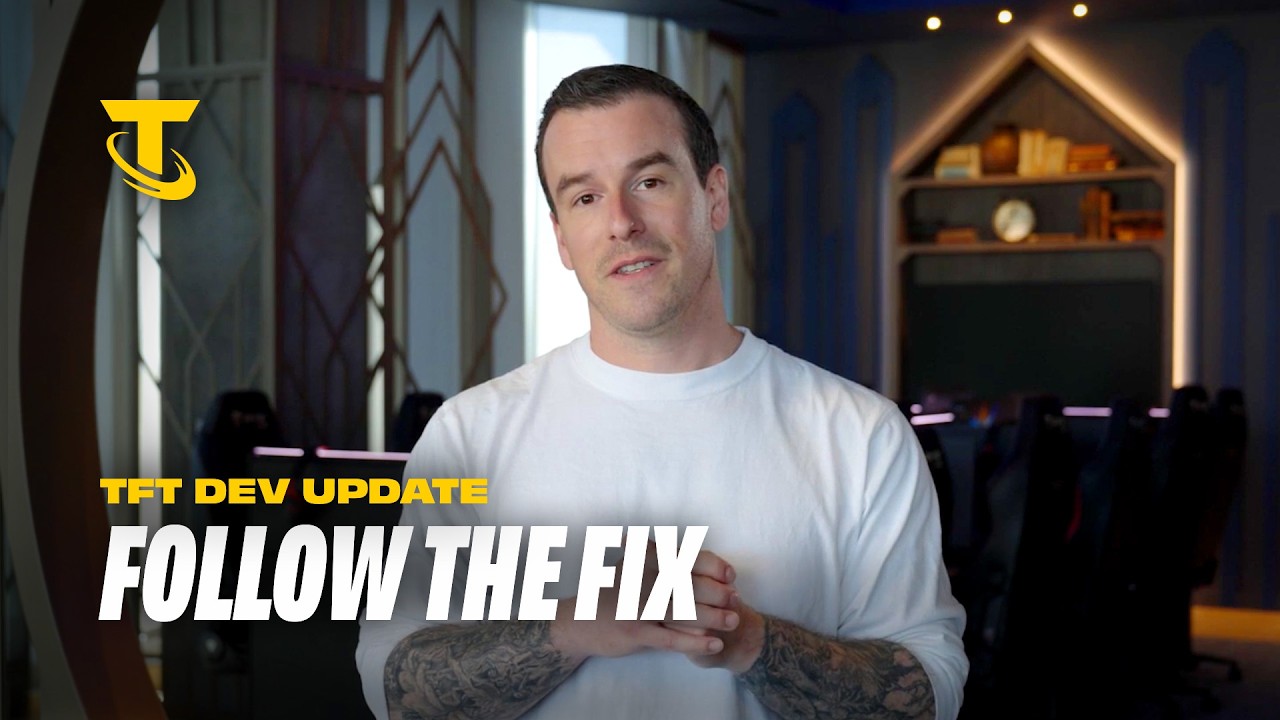
In one of the most transparent developer updates in Riot Games’ history, Geoffrey Virtue, Executive Producer and Head of Teamfight Tactics (TFT), took to the screen to deliver an earnest message to the community: "We’ve got work to do."
Following weeks of mounting community frustration over game crashes, input sluggishness, visual inconsistencies, and broken cosmetics after the rollout of the Enchanted Wilds set, Riot formally acknowledged that the game fell far below player expectations. Rather than issuing a standard corporate statement, the team released a candid post-mortem and launched "Follow the Fix"—a dedicated public tracking portal designed to provide radical transparency as engineers overhaul TFT's newly adopted Unreal Engine foundation.
The Technical Leap: Why Migrate to Unreal Engine?
For years, Teamfight Tactics operated on the legacy League of Legends game engine—a technology framework originally conceived nearly two decades ago. While this shared codebase allowed TFT to launch rapidly in 2019, it created severe engineering bottlenecks as the auto-battler evolved:
- Dual Development Pipelines: Because the original engine wasn't designed for multi-platform parity, developers frequently had to build the same feature twice—once for PC and once from scratch for Mobile.
- Technical Debt and Architectural Ceilings: Adding modern lighting, complex animations, dynamic boards, and cross-platform syncing increasingly pushed the old engine past its architectural limits.
- Longevity for the Next Decade: Migrating to Unreal Engine was chosen as a long-term investment to ensure TFT could scale smoothly across platforms, support ambitious new mechanics, and survive for another ten years without legacy engine constraints.
What Went Wrong: The Enchanted Wilds Launch Dilemma
While the long-term vision made strategic sense, the execution hit massive roadblocks:
- Pushed Schedules & Tough Choices: The engine transition had already been pushed back by an entire set, and PBE (Public Beta Environment) testing was delayed. However, Riot did not have a backup set developed in the old engine waiting in reserve.
- The Decision to Ship: Facing a scenario where players were eager for fresh content, leadership made the difficult call to deploy Enchanted Wilds on the live servers in the new engine.
- The Reality on Live Servers: What reached players felt noticeably degraded compared to previous sets:
- Critical Stability Issues: Frequent client crashes, memory leaks, and severe frame drops across varying PC configurations.
- Input Latency: Delays when purchasing from the shop, selling champions, or moving tacticians.
- Targeting & Movement Glitches: Units stuttering mid-combat, frozen pathing, and broken repositioning windows before battle rounds.
- Cosmetics & Visual Polish: Missing chibi animations, downgraded particle effects, and distorted arenas.
Enter "Follow the Fix": Transparent Engineering Accountability
In response to the backlash, Riot launched the Follow the Fix initiative, accessible via followthefix.teamfighttactics.leagueoflegends.com.
Instead of burying updates inside dense patch notes or vague social posts, the website serves as a live, issue-by-issue progress tracker divided into clear categories:
| Category | Primary Focus Areas |
|---|---|
| Performance & Stability | Eliminating match-disrupting crashes, smoothing frame pacing, correcting memory leaks, and eliminating blurry UI textures. |
| Input Responsiveness | Restoring immediate drag-and-drop response, seamless shop purchases, and fixing unit selling delays. |
| Combat Clarity & Integrity | Addressing pathfinding bugs, resolving scouting visibility desyncs, and fixing opponent indicator inconsistencies. |
| Visuals & Cosmetics | Restoring high-tier Chibi finisher fidelity, correcting item combination VFX, and fixing arena lighting. |
| Mobile Experience | Rebuilding touch targeting, clear selling drag-zones, and UI readability parity with the PC client. |
Looking Ahead: A Grounded Optimism
Virtue reiterated that despite the painful rollout, Riot stands by the decision to move to Unreal Engine. The architectural overhaul provides modern rendering tools, unified PC and mobile development pipelines, and superior asset scaling that the League engine simply could not deliver.
"We still believe moving TFT to Unreal was the right long-term decision... Ultimately, we are optimistic about the foundations and support Unreal provides for years to come. Our best sets are still ahead of us."
— Geoffrey Virtue, Head of Teamfight Tactics
By committing to measurable, transparent benchmarks rather than promises, the TFT team hopes to demonstrate that accountability is more than just words—it is continuous code, patch by patch.
Resources & Official Links
- Developer Video: Follow the Fix | TFT Dev Update
- Official Tracker: Follow the Fix Dashboard
- Official Dev Blog: TL;DW: Follow The Fix Update - Riot Games
This article was prepared with the assistance of AI tools under editorial oversight.


